






Guided Precision: Dr. Larry Davidson Reviews How Surgical Navigation Can Support Safer Spine Procedures

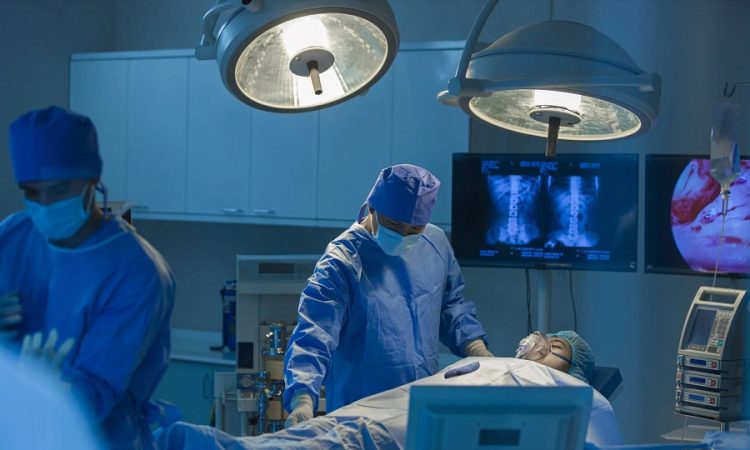
Modern spine care has entered an era where precision is no longer optional. Patients today have higher expectations for safety, clarity and predictable outcomes, particularly when undergoing surgery. In the operating room, surgical navigation systems have become a steady presence, offering surgeons clearer insight into anatomy that cannot be seen with the naked eye. For patients seeking minimally invasive procedures with smaller incisions and faster recovery, these systems serve as an essential tool in protecting the delicate structures of the spine. Dr. Larry Davidson, a board-certified neurosurgeon, with fellowship training in complex spinal surgery, sees the impact of advanced navigation every day in his practice. He notes how these technologies support the judgment and delicacy required in procedures where millimeters separate healthy tissue from vulnerable nerves. In his experience, navigation helps maintain accuracy, while preserving the minimally invasive approach that many patients prefer.
These systems do far more than display images on a screen. They reshape how surgeons understand spatial relationships inside the body when direct visualization is limited. Small windows, narrow working channels, and restricted exposure demand a different type of guidance, one that combines imaging with real-time positional feedback. Appreciating the value of navigation begins with understanding how the spine behaves under surgical conditions and why precise movements are critical.
When Small Movements Make a Big Difference
The spine carries a lifetime of stress, adapting to various postures, movement patterns and injuries throughout its lifetime. During surgery, these structures respond to even subtle shifts. The difference between a safe path and a risky one may come down to the angle of an instrument or a slight adjustment in the trajectory of a screw. Minimally invasive procedures reduce muscle disruption and blood loss, but also limit the surgeon’s view. Navigation systems act as a bridge between limited exposure and complete anatomical awareness. Using a combination of preoperative imaging and intraoperative reference points, these platforms give surgeons a detailed map of the spine’s alignment and the surrounding tissues. As instruments move, the system tracks their location and displays their path in real time. This guidance reduces the uncertainty that can arise when working through small incisions.
Without movement, a spine can appear predictable, but once surgical tools are introduced, tissue tension may shift slightly. Muscles retract, bone surfaces adjust, and alignment may differ from preoperative scans. Navigation systems detect these changes and help surgeons correct their approach instantly. The technology acts as a safeguard, assisting surgeons to adjust to unexpected variations, that could otherwise put nerves or blood vessels at risk.
The Mechanics Behind the Guidance
Most modern navigation systems rely on a blend of fluoroscopy, CT imaging and software that converts anatomical structures into three-dimensional models. Before surgery, a patient may undergo imaging that creates a high-resolution map of the spine. During the procedure, sensors attached to the patient’s anatomy or surgical instruments help match those images to the body in real-time. The system then displays a dynamic view of instrument trajectories on a monitor. Surgeons can see the depth, angle and position of tools long before they reach sensitive structures. This insight is helpful when placing screws or decompressing tight spaces around nerve roots.
The images update as the surgeon moves; these platforms minimize guesswork and strengthen the predictability of each step. Even experienced surgeons benefit from the added clarity, especially in complex cases involving abnormal anatomy, previous surgeries or degenerative changes that distort normal landmarks. Dr. Larry Davidson says, “Preparing patients for what to expect is just as important as the procedure itself. They come in that morning, get prepped, have the surgery, recover in a dedicated area, and only go home once it is medically safe to do so.” He considers navigation a steady support in meeting that standard.
The Steadying Force in a Digital Operating Room
Modern surgical suites are equipped with a range of monitors, imaging systems, and specialized instruments. Navigation stands out for its direct impact on surgical accuracy. By synchronizing instrument movement with imaging, the system reduces the need for repeated fluoroscopy shots. It helps limit radiation exposure for both patients and surgical teams.
In procedures such as lumbar fusion, decompression or cervical instrumentation, the margin for error is small. Even minor shifts can cause nerve irritation or postoperative instability. Navigation allows surgeons to plan the exact placement of hardware and adjust their approach if the anatomy presents unexpected challenges. Its role grows more important in patients with osteoporosis, scoliosis or anatomical variations that obscure traditional landmarks. When a case presents unusual geometry, navigation helps maintain consistency, and reduces the risk of entering unsafe zones.
When Accuracy Protects Recovery
The benefits of surgical navigation extend beyond the operating room. Accurate screw placement and targeted decompressions support predictable healing. When hardware is placed correctly, patients are less likely to experience nerve irritation, hardware failure, or the need for revision surgery. Clear alignment provides a strong foundation for fusion procedures that rely on stability.
For minimally invasive procedures, accuracy supports the entire philosophy behind smaller incisions. When surgeons trust their guidance tools, they can preserve more muscle, limit exposure, and maintain tight surgical corridors. This approach helps reduce postoperative discomfort and supports a smoother return to regular activity.
A Quiet Partner in a High-Stakes Environment
Navigation technology may look complex on the surface, but its purpose is straightforward: support surgeons as they guide instruments through some of the body’s most delicate structures. It provides the spatial awareness needed to work through narrow windows with confidence.
Navigation technology plays a crucial role in supporting patient safety and enabling surgeons to maintain the high standards expected in modern spine care. These systems do not replace surgical skill; they complement it. By pairing anatomical knowledge with real-time imaging feedback, navigation enables the creation of an environment where accuracy guides each step of the procedure. For patients seeking approaches that minimize tissue disruption and support a smoother recovery, this added clarity can be especially valuable.

A Newcomer’s Guide to Strength Training That Actually Works
Key TakeawaysFocus on mastering fundamental movement patterns to build a solid foundation before increasing weight or intensity. Consistency in your...

Choosing Alcohol Detox and Rehab in Mission Viejo and Laguna Niguel

You already know the stakes. Picking the right place for detox and rehab affects your safety, your mindset, and your...

How to Find High Purity, Lab Grade Peptides Online

If you are serious about sourcing research peptides, you already know the risks. Quality varies, labeling can be unclear, and...

The Science and Subtle Art of Gua Sha Massage in Singapore You Need To Know


Key TakeawaysGua sha massage treatments in Singapore are rooted in traditional East Asian medicine and supported by modern-day research on...