





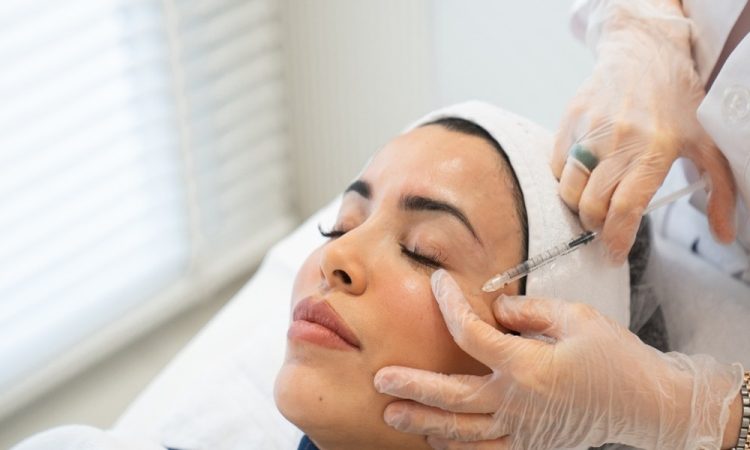
Tiredness that does not actually belong to you is one of the more frustrating things a face can do. The brows drop. The eyes close in a little. And no matter how well-rested a person feels, the mirror tells a different story. That disconnect is exactly what pushes so many Australians toward the Botox eyebrow lift – not vanity, just a desire to look the way they actually feel.
The Muscle Nobody Mentions
Most people blame skin. Ageing, collagen, gravity – the usual suspects. But there is a muscle coiled around the eye socket that actively drags the brow downward, and it quietly gets stronger with age. Meanwhile, the muscle doing the lifting weakens. So the brow loses ground not because nothing is holding it up, but because something else is pulling it down harder. The injections go after that specific imbalance. That detail alone reframes the whole treatment.
Placement Changes Everything
Same clinic. Same product. Two completely different results. That is not an exaggeration – it happens, and the reason is placement. Too high on the forehead and the arch either flattens entirely or shoots up in a way that looks sharp and unnatural. Too conservative and nothing visible changes at all. Finding the right position requires actually reading how a particular person’s muscles move and dominate, not working off a standard map. Brow anatomy varies significantly between individuals. That variation is exactly where inexperienced injectors tend to get caught out.
What the Outer Brow Actually Does
Everyone talks about the arch. The outer tail gets far less credit. Drop that section and the eye shrinks visually – the lid crowds in, the expression reads as heavy, and the face starts to look vaguely unhappy even when it is not. Lift it back into place and the change travels through the whole upper face. A properly executed Botox eyebrow lift focuses real attention on that outer sweep, restoring the angle that makes eyes look open rather than weighed down. Anatomically, it is a small adjustment. Visually, it changes quite a lot.
Asymmetry Is More Common Than People Think
Most people have one brow that sits lower than the other. They have just accepted it. What fewer people know is that this can actually be corrected – or at least meaningfully reduced – through careful differential placement during treatment. The aim is not to manufacture perfect symmetry, which tends to look strange on a real face anyway. It is more about softening the imbalance until it stops being the first thing anyone notices. Patients who come in wanting a general refresh often leave realising the asymmetry was the main thing bothering them all along.
The Surprises Nobody Warns You About
The lift is expected. Everything else that comes with it, less so. The forehead tends to feel lighter. The eye area opens up in a way that is hard to attribute to any one thing. Some people notice their eye makeup behaves differently – sitting higher, blending differently – because the actual lid space has genuinely shifted. Others find their resting expression changes. The face they pull when thinking about nothing in particular stops reading as stern or closed-off to other people. These are not minor add-ons. For many patients, they are the most meaningful part of the result.
Repeated Treatments Work Differently Than Expected
There is a common assumption that doing the same thing repeatedly eventually stops producing results. With brow lifting, the pattern tends to run the other way. Keeping the downward-pulling muscles consistently relaxed over time means the lift stabilises rather than diminishes. Some people find the gap between their sessions stretches out naturally as the muscular behaviour shifts. It is not guaranteed, and it does not happen the same way for everyone. But it is worth knowing before assuming regular maintenance is an indefinite commitment with no variation.
Choosing Someone Who Genuinely Knows the Anatomy
Australian law requires botulinum toxin to be administered by or under the supervision of a registered medical professional. That is the legal floor, not the quality ceiling. A practitioner who actually knows what they are doing will spend real time looking at the face before touching it – observing how the brows sit at rest, how they move under expression, where the muscle activity is strongest. If the consultation feels rushed, or like the appointment has already mentally started before the assessment has finished, that is information worth acting on.
Conclusion
A Botox eyebrow lift works because it solves something specific. Not just the appearance of ageing in a general sense, but a concrete muscular imbalance that makes people look heavier and more fatigued than they are. When the placement is right and the practitioner understands the anatomy well enough to personalise it, the result does not look like a procedure. It looks like the person, just without whatever was making them seem tired. That is a harder thing to achieve than it sounds – and when it lands correctly, it is usually exactly what the patient was trying to describe but could not quite put into words.

How Chiropractic Alignment Supports Posture and Spinal Health

Key Takeaways Posture affects breathing, focus, and long-term spinal health Chiropractic alignment supports joint mobility and muscle balance Many seek...

AC Joint Dislocation From Sports Injuries: What You Need to Know
Key Takeaways An AC joint dislocation often results from a direct fall onto the shoulder during sports and may cause...

Back Massager in Singapore: Top Features to Consider Before Buying
With long working hours and extended screen time, back tension has become a common concern for many office workers and...
Sinus Surgery Costs in Singapore: What Patients Should Budget For


Key TakeawaysSurgeon and anaesthetist fees vary based on complexity, but ensure your safety in a delicate area.Private hospitals offer speed and comfort, while public hospitals offer subsidised affordability.Utilise MediSave and Integrated Shield Plans early to minimise your out-of-pocket expenses.IntroductionLiving with chronic congestion, facial pressure, or recurrent infections can leave individuals feeling physically drained. When medications no longer work, a consultation with an ear, nose, and throat specialist usually reveals that structural intervention is the next logical step. However, the transition from managing symptoms to scheduling a procedure often brings up...